Catherine Edley [00:00:00]:
If 2025 was the year that AI got noisy, 2026 is the year it quietly takes over how we shop Today. I’m breaking down the four trends reshaping retail right now. AI starting to shop on our behalf TikTok Shop becoming the high street of the Internet, why trust is the most valuable currency in retail and how resale is becoming a major revenue stream for both big and small brands. If you run an independent product business, this is the episode that you need to tell you what the retail trends are going into. 20 beyond welcome to the Resilient Retail Game Plan. I’m Catherine Edley and in the next few minutes you’re about to get powerful real world retail strategies from insights shared both from my guests and myself, backed up by my 25 years in the retail industry. Keep listening to learn how to grow a thriving, profitable product business. Let’s jump in with this latest episode.
Catherine Edley [00:00:56]:
One of my favorite jobs of every year is I put together my Forbes.com article on the retail trends to look out for in the year ahead. And it’s my favorite job because I get to sift through a huge amount of information that I get sent almost on a daily basis in terms of reports, press releases, research into what’s going on in the industry. And one of my favorite things to do is to go through all of that information and to distill it into four key trends that are impacting the retail industry. And specifically I’m always looking out for the ones that really impact small businesses as well. And it’s always hard to pick which ones are going to be the trends for the year because there’s an awful lot going on in the industry. But what I’ve picked out for today is my top four. And it starts with a word or two words that I think we’re going to be hearing a lot in 2026. And that is agentic AI.
Catherine Edley [00:01:51]:
So that is all about AI that acts. It’s not AI that just answers, it searches, compares, filters and even can buy autonomously. From the State of Fashion 2026, which is an extensive report by the consulting firm McKinsey. They talk about the move from human led browsing to AI led shopping journeys. This type of AI assistant is popping up already within Amazon, within Etsy, and Shopify is putting out integrations as well. So checkout.com who are a global payments processor, talk about the fact that 46% of UK customers were open to using an AI agent for Christmas shopping and the average spend that shoppers are comfortable delegating is £200. So 42% of people are already using AI for gift inspiration. Criteo, which is a retail media platform, state that 55% of global consumers are comfortable with AI managing things like recurring grocery lists, for example.
Catherine Edley [00:02:53]:
So I think we will certainly see AI agents taking over what we might call chore shopping. So the shopping for things like groceries or household items. And I think that we’ll also see it coming up with suggestions for what we call the cherish shopping. So you’ve got chore shopping, which is your kind of replenishment for your day to day items and your cherished shopping, which is more gifts and purchases for yourself and for other loved ones. Swap, who have a whole platform that helps you, for example, sell overseas with all of your fees and duty rolled in. But also an agentic commerce tech company, they talk about how search is collapsing into agentic discovery. So GEO will replace SEO. So GEO stands for Generative Engine Optimization and that is about how having a business that is optimized for AI models like Chat, GPT, Gemini and Perplexity, not just Google.
Catherine Edley [00:03:54]:
So when we’re talking about SEO, it is definitely going to be a shift towards now geo. What does the AI use to pick recommendations, to pick products to put in front of people? It’s looking at things like structured product data, reviews, third party content, press mentions, sustainability data, anything that you might be able to share on that and then also things like price and delivery reliability. So early testing shows that 70% of the brand information that AI services comes from third party sources, not your website. So reviews, marketplace listings, blogs, TikTok content, press articles. So your external footprint as a brand is, is now as important as your on site footprint. So it’s really fascinating to see that and really interesting to see how businesses are going to have to pivot and or just have a slightly different focus when it comes to optimizing their businesses to basically be in line to sell to the people who are using these AI agents to shop. So what does this mean for you and what does it mean for SMEs and general? Well, it’s clear that clean product data wins. So have you got things like measurements, materials, fit notes? If it’s a garment, do you have your delivery details making those really clear? Are your stock levels clear? Your reviews matter now more than ever and press matters more than ever and even creators.
Catherine Edley [00:05:31]:
So third parties talking about your product. This all matters as well because again, it’s about AI trying to figure out who you are. Now the key thing here is it sounds terrifying and it certainly is going to be a big shift for a lot of people. But what you want to be thinking about. One article I read was talking about how it still matters. The human interaction piece, especially when people arrive on your website, still really matters. So the mechanism is changing how people are discovering us for the first time. But you got to think of it as if you’re a shop.
Catherine Edley [00:06:05]:
If you were a physical shop and a robot is bringing somebody to your door, it still matters when they walk in through the door, the experience that they’re having. So however people get to you, it’s still going to be really important to have that human touch. But we also need to be thinking about what that looks like and is our information really solid? Can we lean into reviews more? Can we lean into press and other third party recommendations more? As I said, I really think this is something that we’re going to be hearing so much about in 2026. I completely see it as one of the main talking points for the year is going to be as a small business, how do you get yourself in front of these AI agents and making sure that you are there and being suggested if somebody asks for a gift for their 65 year old aunt who loves gardening, are they going to be able to quickly identify who you are? Especially if they’re looking for, for example, they want British made or they want sustainable things like that. Is the information there and clear for your customers on your website? So the second big trend that I wanted to talk about today was something that I’ve seen which is snappily called shop attainment, which is basically shopping and entertainment crossing over. Now when I look back at the articles that I’ve written for Forbes over the years and the trend articles in particular, I’ve been talking about live selling, social selling probably since about 2021 or maybe even slightly earlier. So this is not in a way a new trend, but I think what we’re seeing is it just getting more and more mainstream. And certainly I was at a TikTok event a couple of months ago and one thing that really struck me was how major brands were looking to really get involved and have these sort of special brand takeovers on TikTok shop and it’s really moved from being something that is kind of in the periphery to something that is really major like M and s opening a TikTok shop and QVC collaborating with TikTok shop.
Catherine Edley [00:08:25]:
Big picture. TikTok shop was the fastest growing e commerce site in the world. Last year it hit $19 billion in quarter three, 2025. The growth, particularly in beauty and fragrance, is triple digit. And in the US, TikTok shop has already overtaken eBay. So QVC UK, for example, as I mentioned, they’re actually now collaborating with TikTok shop and they had, you know, 30 years of live shopping heritage. They’ve collaborated with Black Friday Eve 10 hour TikTok live stream in 2025.
Rosie Davis Smith [00:09:00]:
Hi, I’m Rezzy. Oh my gosh, we are live right now. Make sure you’re joining us for our let’s kick off Advent event. We’ve got two hours of incredible products, everything you need for this winter. Really good prices as well. I’ll see you in a sec.
Catherine Edley [00:09:12]:
So they’re very much leaning into it as well. There’s a couple of things that are really, really interesting about this is that first off, there is now this sense that you can actually forecast demand through TikTok shop. So Buttermilk, who are creator first agency, they work with some really big names like L’ Oreal and Unilever. They are saying that TikTok search predicts sales two to four weeks ahead. So they’re seeing search terms spike. Creators who are very much in tune with this are latching on and then shop conversions follow. So you can almost read demand patterns earlier than Google Trends, which is fascinating and again, something that could be really useful for small businesses who can react quicker than a lot of big businesses. Bambusa, who are a Swedish live shopping platform, they have technology where they basically can make any videos searchable, shoppable.
Catherine Edley [00:10:07]:
They had never fully dressed, where their sort of launch for their Christmas collection was videos about putting content creators into their party outfits, sending them to this event in branded taxis, and then all of those videos became shoppable as well. Yes, it’s about the kind of traditional idea of the live sale, but it’s also about content that is entertaining, being shoppable as well. If you are listening to this and you think, oh great, TikTok shop, that is pretty much the last thing that I need in my life is another place that I need to be leaning into. I think what’s really fascinating to me in particular about TikTok shop, is that. What’s really fascinating to me in particular about TikTok shop is that they’re really leaning into creators making the content. So we know that people want these live stream events and this shoppable, fun content. So, for example, P Louise, the cosmetics brand, they recently achieved over 2.7 million pounds in sales in just 14 hours during their Christmas collection showcase live. So this was the biggest live stream in the uk, actually, I believe it was a world record for a live stream.
Catherine Edley [00:11:22]:
So we know that it’s about this idea of entertainment. So people coming for an event, coming to be entertained. For a lot of people, this is just not something that’s in their comfort zone. So it can feel quite exclusionary to say, okay, well actually this is big growth area. However, what we can see is that creator content is actually the primary sales channel on TikTok shop. So what does that mean? Well, it means that there are people who for a living love to go on camera, create content. So they are creating that content and they are talking about the products that they love. And then once they’ve talked about those products that they love, they’re then linking to the brand through their TikTok shop, but through an affiliate link.
Catherine Edley [00:12:03]:
So that if you buy from their affiliate link, then the brand will give the creator somewhere between 10, 20, even 30% of the sale. But effectively for the brand and for the busy small business owner who has got so much to do that they just don’t have the time to go live all the time or come up with content ideas, this is something that can be really beneficial. So an E marketer case study showed that many brands selling on TikTok shop were seeing 60 to 80% of their TikTok sales from creators. 45% of users say influencer collabs or content is helping drive their purchases. TikTok’s internal metrics which don’t state the exact percentage of sales that are coming from creators. It does say that creator affiliate tools are one of the fastest growing revenue engines on the platform. A lot of these are micro influencers. So that’s 10,000 to 100,000 followers.
Catherine Edley [00:13:02]:
They’re seeing higher engagement, up to 60% higher than some of the macro creators. They’re seen as more real and less salesy and they convert better for small businesses because audiences trust them. And they’re also really cost effective because many of them will work on an affiliate only model where they pay when they sell. And also globally there has been an overall shift from spending money on meta ads, for example, or paid advertising, to putting more money behind building these affiliate relationships. Because as a small business owner, you know that it’s much better to pay, even if you are paying a cut of your sales to somebody else is much better to do that once they’ve sold as opposed to spending money upfront on the ads with no real guarantee of return. In terms of what SMEs, what small businesses should be focusing on then on TikTok is if you’re super busy, if making content is not in your wheelhouse, then consider making relationships with creators. Because they know what content sells, they’re fast to produce, they bring their own audience, they drive more conversions. On TikTok Shop, can you find 10 to 30 micro creators who fit your brand? Give them some of your hero skus and provide affiliate links.
Catherine Edley [00:14:16]:
This is something that is really interesting as again I attended this TikTok shop event and it was clear that that was really what they were trying to do is they were trying to match make between content creators and brands and the brands were incentivizing people through this commission, giving them product to try and to share, but ultimately using them as a revenue generator. The other thing that you can do is try lives. These can be very time consuming, but is interesting to try it, maybe give it a go, see what happens. Often with lives, people do want some kind of reason to be there that day. So for example, could it be a product launch? Could it be free shipping or something like that? And that could be something for you to explore. Again, I’m mindful of the fact a lot of people listening to this are very tight on time, but it’s definitely something to consider going forward. Your own channel, effectively your own content on TikTok becomes the credibility booster. So if somebody sees your brand being presented by a creator, when they go back to your brand and have a look at it, what is it that they see? Are you showing behind the scenes? Are you sharing your values? Are you explaining how the products work effectively? What you’re trying to do then is build a bit of a process where your creators are sending people to your shop.
Catherine Edley [00:15:32]:
Your lives you may be attempting or engaging and converting yourself. Also, lives tend to get pushed out to people who don’t currently follow you. So even if you don’t have a big following on on TikTok, it can be worth trying. Lives and then your brand channel there is then effectively able to retain people and help build trust. Which leads me on neatly to my next big trend, which is all about. Which leads me on neatly to my next big trend, which is all about trust as the new currency. So trust is more valuable than ever in 2026 because there’s a lot of weird stuff out there on the Internet and people are really learning to trust less. So for example, AI generated content means that people are growing extremely skeptical because there are now videos that are extremely convincing.
Catherine Edley [00:16:33]:
So I was joking with somebody that one of my favorite things if you look at my Explore feed on Instagram, it’s full of pet videos and I love cat and dog videos. And then I discovered that some of them are AI generated. And honestly it was a real downer because you think, come on, you know, you don’t want to feel like you’re being sucked in by this content. So now it’s making me a lot more skeptical. When I see a cute animal video, I think, is that really an unlikely friendship between two animals or is this just AI? And I think that that feeling, I’m joking about it, but I think that overall feeling of not being able to trust your own eyes is really pervading into the online space. And part of me wonders if everyone will just get over making weird videos with AI and it’s some of that AI slop will just disappear because it’s not really working or whether it’s just going to become increasingly full of AI slop, who knows? But one thing I can tell you is that shoppers are more selective and they’re risk averse and they’re aware of the fact that they’re a scam. Websites and fake accounts and all sorts of stuff going on. So it’s going to be a question of you showing the behind the scenes.
Catherine Edley [00:17:42]:
You building trust with your customers will really help you in 2026. So Capgemini, the global consultancy, talk about the four Cs of trust. They are consistency. So having a reliable experience every time. Having accurate stock so you’re not selling out. Having to explain to people that you don’t have the stock that you thought you did. Shipping reliability, which as we all know is not always in our hands. Having the same tone across every platform.
Catherine Edley [00:18:07]:
I think this is really key as well, like making sure that when you connect the dots across platforms that people are seeing the same thing, same messaging. The second C of trust is care. So having human and empathetic customer service, I do think there is definitely room for that human touch. Especially since so much of customer service is taken over by bots. Quick responses, fair policies, transparent refunds, those are all things that can really help build trust. Contextualization is the third C. So that’s personalized recommendations that feel natural, not creepy. You’re giving this why we recommend this explanations.
Catherine Edley [00:18:42]:
So for example, if it pops up and they think why do you think I want this? They can actually tell you because you liked this product, because you bought this item, and so on and so forth. Or it could be as simple as you’re getting this in email because XYZ so they know you’re giving them an explanation. And then the fourth one, the fourth seat of trust is clarity. So straightforward returns and delivery pages, transparent sustainability claims, avoiding any greenwashing, clear sizing and material information, and making sure that you don’t have vague language. So in other words, for small businesses, what helps build trust is things like clear upfront delivery, promises proper sustainability specifics rather than vague eco friendly terms, having a human tone in your emails and socials and making it easy to get in touch with a real person, which is a lot easier for small businesses than big businesses. So I think this combined with the need for things like more reviews and press to help really build out a picture for agentic AI to understand and understand the context of your business. This idea of focusing on trust for your business is also really important as we go into 2026. How can people know that you’re a real human and how can they know that they can trust you? And the final trend, again, this is something that I have talked about on and off for a very long time, but has really come to fruition is the resale and circular economy.
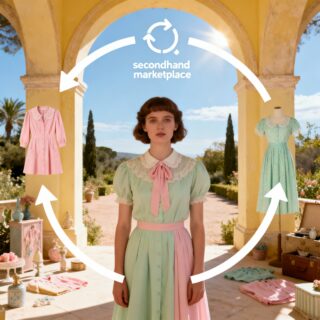
Catherine Edley [00:20:07]:
So this is still growing very fast. So Thredup, which is a major US resale marketplace, does research every year on the school, the state of resale. They forecast that global secondhand will be $367 billion by 2029. And it’s growing 2.7 times faster than new apparel. And I remember all the way back in, I think it was maybe 2019, I think it was pre pandemic going to a talk where somebody said that resale is going to be bigger than fast fashion. I think pretty much by 2025. And at the time I was really sort of slightly taken aback. I wasn’t 100% convinced, but really having seen the growth of places like Vinted and ebay for secondhand clothing, I can well believe it.
Catherine Edley [00:20:53]:
58% say resale value affects buying decisions. So it’s also having an impact on first purchase decisions or purchasing of new items. So 47% say they avoid items with poor resale value. And for younger shoppers, resale is really part of the value equation. So especially the Gen Z customer is thinking about resale and what that means for them. So McKinsey’s State of Fashion 2026 report forecasts similarly huge international market. 59% of shoppers expected to buy resale in 2026 with AI is actually improving authentication and listing ability. So it’s driving platform profitability.
Catherine Edley [00:21:34]:
So Vinted turned 17.8 million pound profit in 2023 and then a 76.7 million pound profit in 2024. So a 330% growth in their profit. In Q1 they became France’s largest apparel retailer. So this again just points to how resale is something that is really, really important for people to consider. So what does it mean for small businesses? People are going to be factoring resale value into their buying decisions. Quality matters more than ever and resale is a customer acquisition tool and circularity also creates trust. So what can you do to dip your toe in? Could you have a trading day? Could you have a pre loved section on your store or online? Basically can you just highlight the quality of your products so that people understand that they have got longevity and potentially will hold their resale value really well? Once again, the key trends to or things to be thinking about as a small business as we move into 2026. Preparing your data and your external footprint for shopping to become AI led as opposed to customer led, especially online.
Catherine Edley [00:22:44]:
TikTok shop think about the fact that customers really are expecting to see entertainment around their shopping. Can you lean into creators and think about your TikTok feed itself then being something that is about helping to build that trust? And on the note of trust, thinking about those four Cs, the consistency, care, clarity and context to keep building that relationship with your customer and then resale. Just being aware of the huge growth. Thinking about can you use it to drive loyalty? Can you use it to retain your customers? So it can feel really overwhelming listening to something like this and thinking about your already extensive to do list, especially in the run up to Christmas where you’re in your busy season. My suggestion from this episode is just to pick pick one thing from one trend and think about how you can implement it in January. Let’s be realistic. So is it going to be for example, something like making sure that your reviews are up to date or that you’ve been requesting reviews? Is it going to be thinking about reaching out to some creators on TikTok Shop? What might it be that you could do to start getting your business ready for the inevitable shifts in the retail industry to 2026? Thank you so much for listening. If you like, follow or subscribe to the podcast, then you’ll be the first to know about each new episode which comes out every Thursday.
Catherine Edley [00:24:10]:
And I’ll see you next.Retail_Trends_2026_The_Four_Shifts_Every_Small_Business_Needs_to_Prepare_For
 Skip to content

 Platforms like Amazon, Etsy, and Shopify are already experimenting with AI agents that streamline entire shopping journeys. And this year, a new acronym enters the chat: GEO (Generative Engine Optimisation) — the next evolution of SEO.
 TikTok Shop isn’t a fad — it’s becoming the internet’s high street.
 With scams, fake reviews and AI-generated content everywhere, customers question everything. For indie retailers, this is both a challenge and an opportunity.
 Here’s what customers are now thinking