How_to_Manage_Cash_Flow_During_Seasonal_Peaks_in_Retail_and_Survive_the_Christmas_Crunch_
Catherine Edley [00:00:00]:
Have you ever had that heart sinking moment in October where your bank balance is looking terrifying, but you’ve got thousands of pounds of stock sitting on your shelves? If you have, then you’re not alone. This festive cash flow pinch is something that every single retailer goes through. And in today’s episode, what we’re going to be doing is looking at why it happens and how you can manage it to make your life a little bit easier. Welcome to the Resilient Retail Game Plan. I’m Catherine Edley and in the next few minutes, you’re about to get powerful real world retail strategies from insights shared both from my guests and myself, backed up by my 25 years in the retail industry. Keep listening to learn how to grow a thriving, profitable product business. Let’s jump in with this latest episode. So let’s talk about why this happens.
Catherine Edley [00:00:49]:
Why is September and October often a real pinch point for retailers? Well, the truth of the matter is that everyone is in the same situation because you have to get your Christmas stock in ahead of time. Most people are not going to be able to completely spread out their Christmas purchasing to be coming in, for example, in November or December. And if you do bring things in in November and December, you risk lagging behind with your ordering because you’re so busy with sales and you miss taking advantage of the key Christmas selling season. I think it’s important to talk about this because anytime I talk about seasonal cash flow pinches, I get so many messages from people who tell me, oh my goodness, I thought it was me. I thought I was doing it all wrong. But the truth is it’s very hard to navigate around this and most people will get themselves in a situation where they have to pay out the stock before the sales start coming in. Even major retailers face this. In fact, they are dealing with much bigger numbers and a much bigger juggle.
Catherine Edley [00:01:57]:
I’ll give you an example. When I worked at Paperchase back in the day, we used to have to have a meeting with the finance team every year that was called pppp, pushing payments past peak. And basically the buying team and the merchandising team were tasked with going back to every single one of our suppliers and trying to get any improvements whatsoever that we could on our payment terms. Whether that was splitting orders so that we paid for things slightly later, whether that was asking them to extend it slightly, whatever it might be. Basically they said, you know, every single day that you can convince them to let you pay a little bit later, then it helped with the cash flow. So this was a huge Juggle for a very, very seasonal business. Paper Chase had a huge emphasis on Christmas for their sales. It was something that was absolutely make or break for the whole year.
Catherine Edley [00:02:49]:
And as a result, they had to spend a lot of money getting the stock in in that August, September, October timeframe before the sales really kicked off in November and December. Another example was when I worked at Coast Fashions, another business that no longer exists. We would have to manage and negotiate around warehouse capacity. So we would be dealing with a shared warehouse that was shared with people like Karen Millen, Oasis Warehouse. And we had to negotiate about when our stock was going to come in. So sometimes it had to come even earlier than we really wanted it to because we had to physically get it all through the warehouse and out to the stores. And warehouses have a fixed amount of capacity. So big retailers, they end up having to push stock out for Christmas super early.
Catherine Edley [00:03:42]:
In fact, if you’ve ever been in a supermarket and noticed that on top of their shelves in September, they start stacking those boxes of quality street and crackers and things like that ready for Christmas. That’s because they’re trying to manage just physically getting all of that stock through their warehouse and out to stores without really messing up their capacity. So they’re dealing with not only cash flow pinches, but lots of operational pinches as well. So you have this big need to spend on stock. You need to secure the stock ready for the busy season. And then the sales haven’t come in yet. And sometimes you have to make payments during those quiet summer months. So it’s absolutely no surprise that come September and October, most people are feeling the pinch.
Catherine Edley [00:04:32]:
One of the theories that I’ve heard about why Black Friday is called Black Friday, and the one that I personally believe, is that it was known as Black Friday because that was the day that retailers went into the black. In other words, they traded at a loss all the way through the year, up until Black Friday, where the boost in holiday sales meant that they went into the black. And then basically everything from Black Friday to the end of the year was profit. People have this concept that, oh, well, the big retailers must be swimming in profits. They’re not. They’re dealing with these pinch points just as much as small businesses are. If anything is possibly a much bigger deal and much higher stakes. You’re not alone.
Catherine Edley [00:05:13]:
The big guys face this. It’s very common. It’s not that you’ve messed up saying all of that. There are things that you can do to try and help you improve that. It can feel really stressful. I just want to mention that as well. But if you’re like, okay, yeah, fine. I know that I had to do this, but why do I feel so stressed? It’s naturally stressful.
Catherine Edley [00:05:33]:
I think of it the same way as when you’re on a roller coaster and you’re on the steep upward incline before it tips over the top and you’re sitting there and you’ve committed to it now, so it’s going to happen, but you just have to sit there while the car goes up the track and you just hope that when it drops that there’s as much excitement, exhilaration as there is sheer terror. So it is really emotional, I think, as well, for small businesses, it’s your money. It’s your money that you’ve taken from your account to spend on this stock. So it’s a much stronger emotional connection than a big retailer would feel. And also it ties into that secret fear that a lot of people have is, well, what if the sales don’t come? What if I don’t have a good Christmas? What impact is that going to have on the business as a whole? So let’s talk about some of the ways that you can try and manage this pinch point a little bit. As I said, there is an element to which it is completely inevitable. There are some things that you can do to preempt it and try and make life a little bit easier for yourself. So the first thing is trying very hard as best you can, to smooth out your cash outflows.
Catherine Edley [00:06:54]:
So be aware of how much money you’re intending on spending. See if there’s anything that you can do to push some of those payments. Now, if you are a retailer and you buy through a platform like Fair.com for example, then that is really helpful because they have payment terms that can really help you with spreading out the payment of your stock so that you’re not having to pay for everything upfront. You can spread it out over longer. But if you’re buying directly from suppliers, ask them if there’s anything that they can do. Can you split payments? Can you have a little bit longer to pay? If they’ve got payment terms that they’re offering, you may ask them and they may say no. But if you never ask, then you’ll never find out. And it’s worth just having that conversation with as many people as you can to try and see if there’s anything that you can do to again, push those payments a little bit later.
Catherine Edley [00:07:46]:
If you are planning an order up front, is there Any way that you can split the payments. And if you can’t split the payments, it could you commit to something upfront, but then maybe get some of it delivered a bit later so that again, you’re not paying for everything absolutely all at once. The other thing to look at in your business is what expenses are you going to have in Q4. So for example, I would not suggest a really big outlay on something like a new website in Q4 if you’ve got lots of other expenses going out. Now, it may sound really obvious, but it’s worth just going through what you’re planning on spending and if you can push it a bit further to the point after which the sales start coming in, then that’s going to be really beneficial. The other side of that is the money coming in. So if you’re somebody who sells on wholesale or to corporate, make sure you’re chasing in your invoices. Get into the mindset that every single payment matters both in and out.
Catherine Edley [00:08:43]:
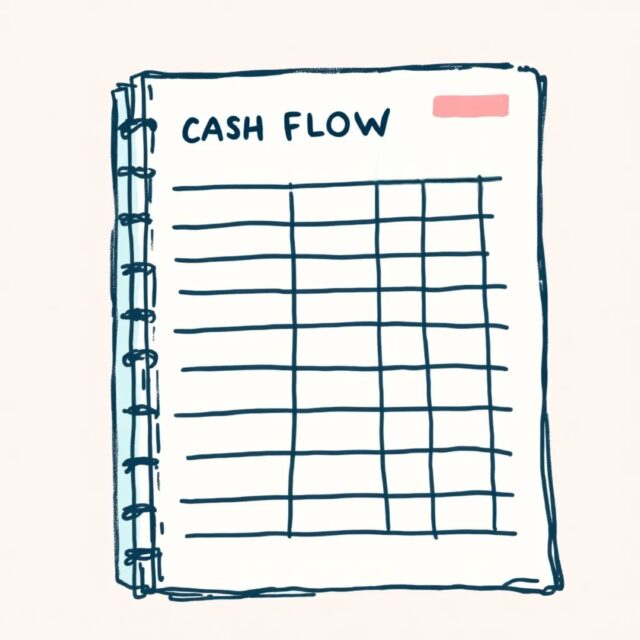
Make sure you’re going through all of your payment commitments with a fine tooth comb, making sure there’s nothing that you can’t delay till later. If you’re owed money, make sure that you’re chasing that in. Definitely overcome any reluctance that you might have to follow up to feel pushy. If somebody owes you money and it should have been paid, then you are well within your rights to politely but firmly follow up with them frequently until you get that money in. Because here’s the thing, they possibly, especially if you are looking for payment from a larger retailer, they may be banking on the fact that they’re going to pay the people who demand the most first because they’re also trying to manage their cash flow. So you need to think about every single payment into your business and making sure that you are really taking care of your own cash flow as much as possible. One of the things that’s going to help you more than almost anything else at this time of year is having a cash flow forecast. Now, if you head over to resilientretailclub.com/cash flow, then you will get my signature cash flow template.
Catherine Edley [00:09:43]:
I’m super excited to be able to offer this to you as a freebie because I think it’s an absolute game changer and this is going to help you map everything through. A lot of the stress that people get from this fourth quarter cash flow is the fact that they can’t see exactly what’s going on. They don’t know how they’re going to be able to navigate through it. Sometimes it’s going to be absolutely fine. You just need to see it all in black and white. Sometimes is going to be a narrow path that you have to walk to stay on the right side of positive cash flow. But if you’ve got it all mapped out, you’re going to be able to really understand how to do that and to get you through those pinch points. And again, it’s much, much easier, I believe, to negotiate with somebody around payments if you can come to them from a position of strength before you’ve got yourself into a pickle where you can’t pay and say, look, is there any possibility that I can could split these payments? This is what I’m proposing on this date, this date, this date, and then stick to it.
Catherine Edley [00:10:37]:
That is something that can actually help build trust with your supplier as opposed to defaulting and going silent. Because it’s a much stronger position to be in, to be able to approach people who perhaps you owe money to and give them a proposed payment schedule that you’ve mapped out on your cash flow planner that is going to work for you rather than getting yourself into a real stress because you know that you have payments to make and you’re worried about whether or not you’re going to be able to pay them. It’s much easier to negotiate on this kind of thing when you’re coming from a position of strength and you’ve got a really clear cash flow planner mapped out. So the key thing with the cash flow planner is mapping out your sales plan for the season, which is super useful to do anyway, but then also adding in a stock plan, working out what you’re going to buy, and then using that plan to feed into the cash flow planner. So head over to resilient retailclub.com cashflow to get your free planner and to find out more. The other point that I want to make as you get ready for Christmas is that if you optimize your existing stock, it’s going to help massively with your cash flow overall. Now, episode number 265 was all about a stock planning checklist for the festive season. So if you haven’t listened to that episode, go check it out.
Catherine Edley [00:11:55]:
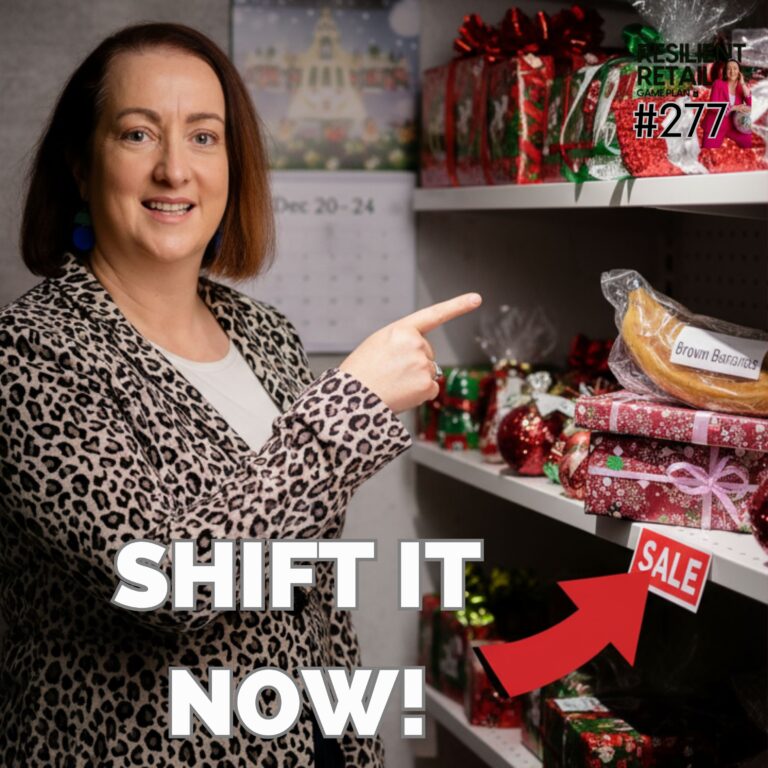
But what I really want you to think about in this situation is when you’ve had to pay out a lot of money to get your festive stock in, this is not the time for you to have dead stock sitting around on your shelf as cash that is stuck in your business when you really desperately at this time of year, need it in your bank account. So this is the perfect time of year to have a bit of a clear out. Especially if you’ve got really slow moving product that you believe you could do a targeted discount on. This is the time of year to go through your samples and seconds, put together a sample sale. This is the time of year to really look critically about what you’ve got so that you are able to take that non performing stock and convert it back into cash at a time when you desperately, desperately need it. So when you are over committed in stock because you’ve had to build up ready for the seasonal sales, as I said, this is really the point at which you absolutely 100% cannot afford to be sitting on stock that is not paying its way. And as much as it’s difficult to get rid of stock when you know that you’ve paid good money for it, you’ve got to think about it as trapped cash. You’ve got to think about how you could ease the cash flow in your business enormously if you do some work to really slim down that unproductive stock before you start building up your seasonal stock for Christmas.
Catherine Edley [00:13:15]:
So I would strongly recommend this is something that you maybe even put in your diary for a summer sale next year. Get yourself ready and clean in terms of your stock so that you’re not sitting on excess. And as you start to move towards that buildup of stock in the September, October time frame, it will help with the pinch point because you will already have liquidated anything that is not performing. And so you’re not sitting on trapped cash as well as all of that extra cash that just hasn’t started working for you yet. So As I mentioned, 265 is all about planning for Christmas. But I would just stress some caution here about avoiding too much of that stock. That is what I call the brown bananas. In other words, the Christmas Stock that come the 26th of December, absolutely nobody is going to want.
Catherine Edley [00:14:02]:
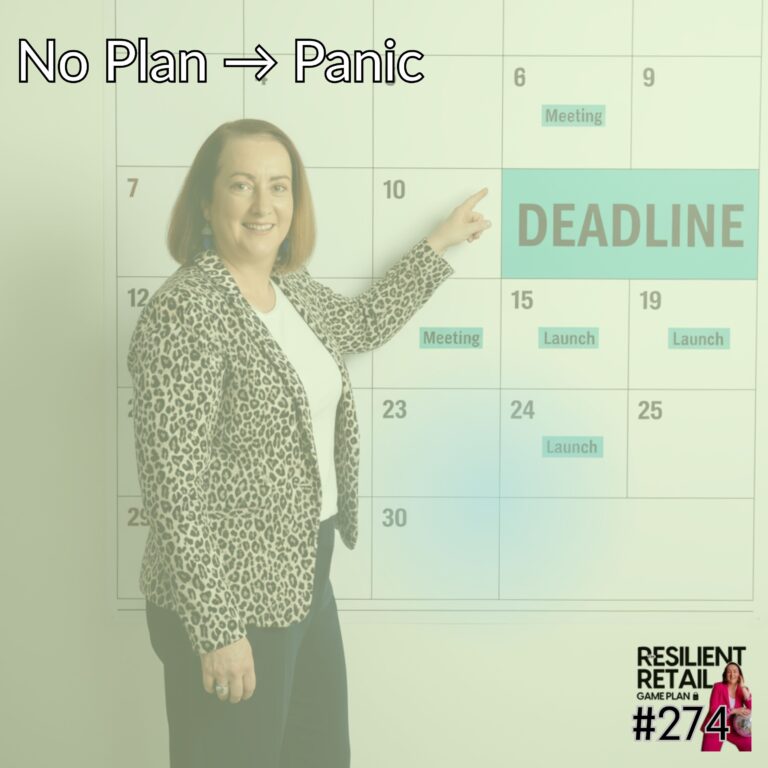
You want to plan your stock levels really carefully to avoid having leftover dead stock in January. And if it is something that is hanging around as you go through the peak season, that you’re taking advantage of selective offers or discounts so very targeted so that they don’t damage your brand, that you can make sure you keep clearing through that super seasonal stock and help you get on top of that pinch point in your cash flow. So the keys then to managing this pinch point in your year, it is all about forward planning. Making sure you’ve got a plan mapped out for your stock, making sure that you have got really clear on how much you actually need to be buying that you’re not over buying. Making sure that you’re having those conversations with your suppliers about trying to improve your payment terms if possible. Making sure that you’re not spending money on things that aren’t necessary in the fourth quarter. Making sure that you’re having a really good clear out so you’re not sitting on dead stock which is only going to make that pinch point worse. And above all having it all mapped out so you can actually see what’s going to be going in and coming out and then putting together a realistic sales plan for Christmas so that you’re not left with too much stock at the end.
Catherine Edley [00:15:16]:
But the key thing here is that this is something that is a common seasonal challenge. Everybody experiences it but planning can make it manageable and it can really reduce the stress. So head over to resilient retail club.com cashflow, get your free cash flow planner and I’ll see you next week.
 Skip to content


 Many retailers think the stress of autumn cash flow is down to poor planning. In truth, it’s built into the retail calendar. Here’s why: